How Regulatory Disclosures Shape Return Calculations Across Game Subtypes
Written by Amir Beck · Oct 16, 2026
How Regulatory Disclosures Shape Return Calculations Across Game Subtypes
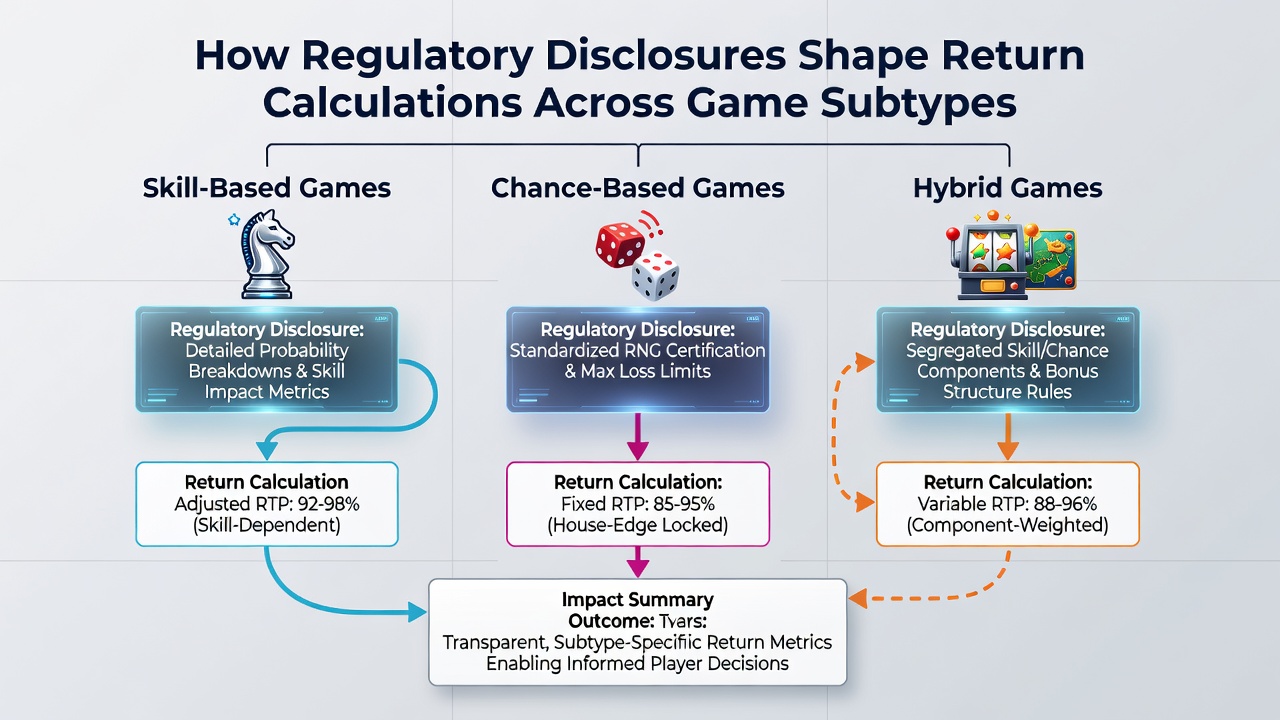
Regulatory disclosures require operators to publish precise figures on expected returns, and these mandates directly influence how returns get calculated across slots, table games, bingo variants, and video poker formats because each subtype follows distinct mathematical models that regulators must verify before approval.
Core Mechanisms of Disclosure Requirements
Authorities in multiple jurisdictions demand that game providers submit detailed RTP data derived from millions of simulated outcomes, and this process starts with independent testing labs that run standardized protocols to confirm the percentages align with submitted software code, whereas operators then integrate those verified numbers into public-facing materials like game rules and lobby displays.
Data from the Nevada Gaming Control Board shows that slot machines must display RTP values within a narrow band of 75 to 98 percent, and any deviation triggers re-certification cycles that recalibrate the underlying random number generator parameters to restore compliance.
Differences Across Game Subtypes
Table games such as blackjack incorporate player decision trees into their return models, so disclosures must account for optimal strategy charts that shift the house edge by several percentage points, while bingo subtypes rely on fixed prize pools and ticket sales volumes that determine returns based on participation rates rather than individual spins.
Video poker variants add layers of complexity because returns hinge on paytable structures and hold percentages, and regulators require separate calculations for each game variant to prevent operators from bundling low-return options with higher ones in misleading ways.
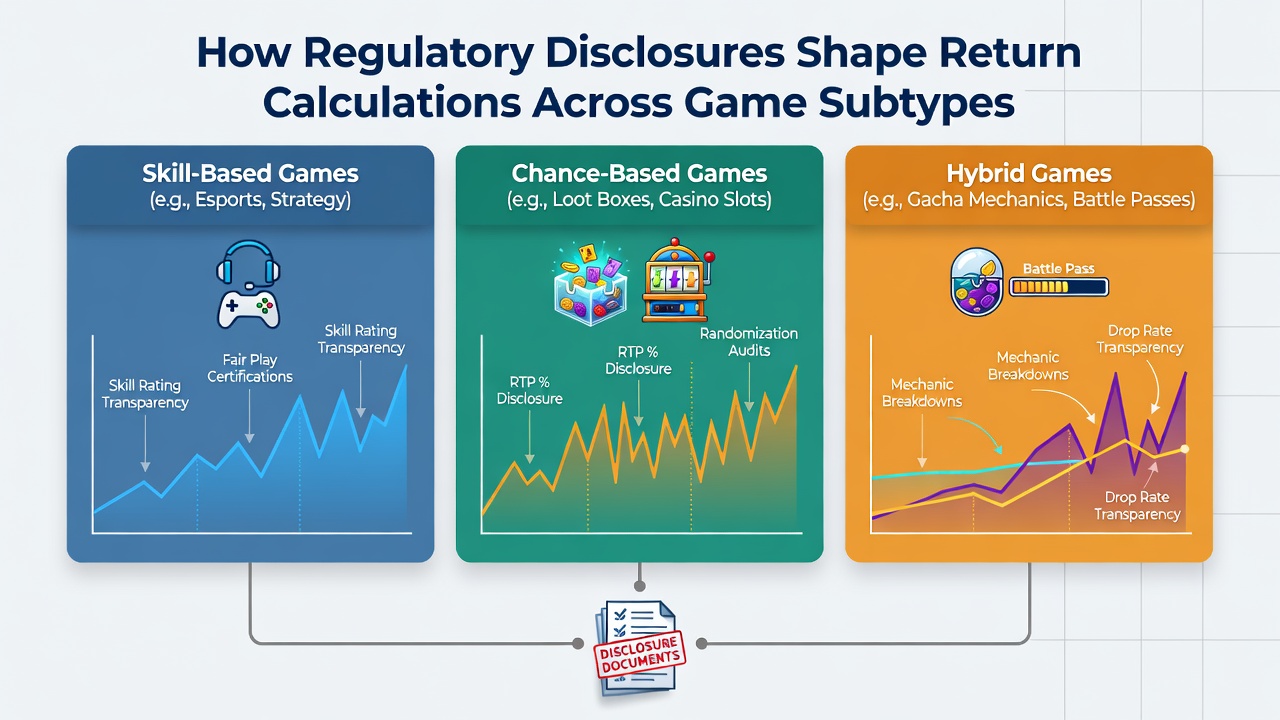
Researchers at academic institutions have examined how these subtype-specific rules affect overall player information, and one study revealed that transparent disclosures in bingo halls lead to more accurate pool distribution forecasts compared to casino environments where progressive jackpots introduce additional variables.
Regional Approaches and Data Integration
Canadian regulators through the Alcohol and Gaming Commission of Ontario enforce quarterly reporting cycles that tie disclosed returns to real-time transaction logs, and this approach allows authorities to cross-reference theoretical RTP against actual payout histories to detect anomalies early.
European frameworks similarly require operators to break down returns by game category in annual submissions, and the result is that bingo operators often publish separate figures for 75-ball and 90-ball formats because each uses unique ball draw mechanics that alter expected returns over large sample sizes.
What's interesting is how these disclosures feed back into game development, since providers now design subtypes with built-in disclosure templates that simplify compliance checks and reduce the time between submission and market launch.
Calculation Adjustments and Verification Processes
Return calculations begin with base probability models that simulate every possible outcome, yet regulatory reviews often mandate adjustments when live data diverges from projections, and this iterative loop ensures that published figures remain representative across millions of plays.
Observers note that slots with multiple bonus rounds require segmented disclosures where base game RTP and feature RTP appear separately, whereas roulette disclosures focus on single-zero versus double-zero wheel configurations that produce fixed return differentials without additional layers.
By October 2026 several jurisdictions plan to expand electronic disclosure portals that pull live data feeds directly from certified systems, and this shift promises tighter alignment between calculated returns and the numbers players actually see advertised.
Implications for Operators and Compliance
Operators must maintain internal audit trails that mirror the disclosed calculations, and failure to match regulatory submissions can result in license reviews that halt new game approvals until discrepancies resolve.
Industry reports from trade associations highlight how smaller bingo operators adapt their return models to meet the same disclosure thresholds as large casino groups, and the process often involves third-party consultants who specialize in subtype-specific probability modeling.
Conclusion
Regulatory disclosures continue to standardize return calculations by imposing uniform verification standards across game subtypes, and the resulting transparency allows consistent comparisons between slots, table games, bingo, and video poker while accommodating the unique mathematical structures of each format. As reporting systems evolve, the connection between disclosed figures and actual calculations grows more precise, which supports ongoing compliance across diverse regulatory environments.